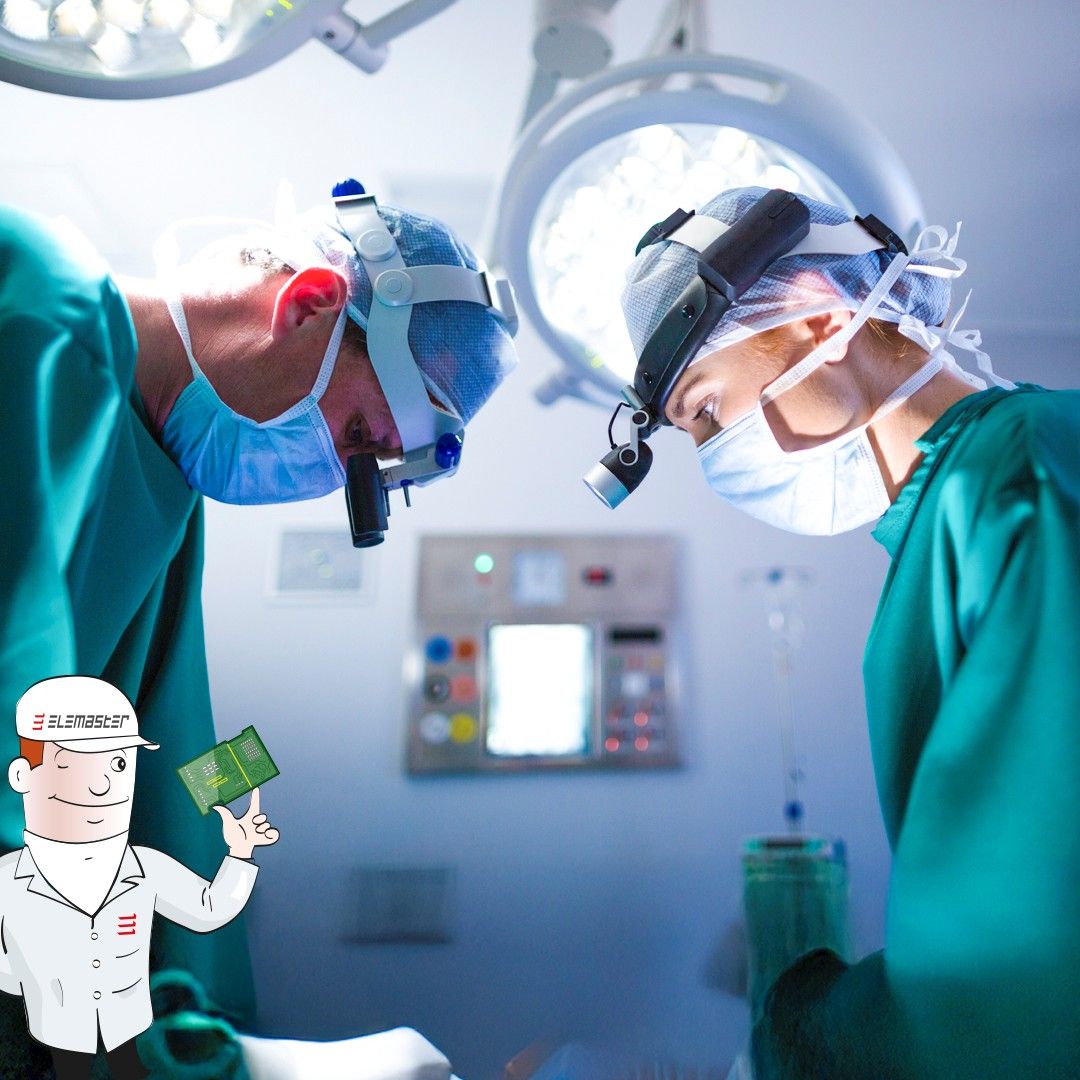
The 36th Congresso di Chirurgia dell’Apparato Digerente “Palazzini”, held in Rome under the coordination of Sapienza Università di Roma and Associazione Chirurgica Italiana Tecnologica, has once again confirmed itself as one of the most influential global stages for digestive surgery and innovation. With over 150 live surgeries broadcast from five continents and more than 200,000 participants onsite and online, the event provided a unique overview of current practices and emerging technologies in minimally invasive surgery.
From laparoscopy to embedded intelligence: the new medical frontier
Among the themes that emerged most strongly during the Congress was the evolution of laparoscopic platforms, which are increasingly shifting from purely mechanical systems to mechatronic architectures integrating embedded electronics, sensor layers and real-time data processing.
This transformation goes beyond hardware miniaturization. It involves the convergence of clinical knowledge, electronic engineering and software development, aimed at creating devices that are not only functional but also smart, adaptive and safe. In the dedicated innovation session, Gabriele Stagnaro, Business Development and Project Manager at Eletech (Head company of the of the International Design Centers, R&D division of Elemaster Group), explored these concepts alongside Dr. Antonello Forgione, Founder and CEO of ValueBiotech.
Their dialogue highlighted how structured design methodologies and reliability-driven engineering are becoming essential to the success of next-generation surgical systems. From sensor fusion architectures to signal processing units, the trend is clear: electronics are becoming a core enabling layer for surgical innovation.
Beyond the paradox: when innovation requires no compromises
A central reflection emerging from Gabriele Stagnaro’s contribution concerns the very nature of innovation in medical technology. True innovation does not lie in finding the best compromise between conflicting needs, but in overcoming the paradox altogether. In surgery, increased visibility often means higher invasiveness, greater precision often brings greater complexity. Progress happens when these apparent contradictions are resolved without sacrificing one dimension for another.
This process rarely stems from a single mind. While innovation requires a holistic vision capable of framing the problem as a whole, its realization is always collective. Medical innovation becomes effective only when multiple competencies converge. In this context, the interaction between clinical insight and engineering expertise represents a genuine symbiosis. The clinician identifies the limitation encountered in practice. The engineer designs the path to overcome it.
From idea to device: navigating the innovation pipeline
Medical innovation unfolds across very different domains, from clinical research to engineering development and industrial manufacturing. To describe this progression, the sector commonly refers to the Technology Readiness Level scale, which measures the maturity of a solution from early conceptual stages to fully validated products on the market.
Bridging these stages is neither automatic nor linear, particularly in the medical field, where quality, safety and reliability are non-negotiable. Through ELEVO, Elemaster has focused on mapping and supporting these critical transitions. Moving from laboratory validation to a certified medical device requires a long and demanding journey, marked by technical, regulatory and organizational challenges.
This path is not theoretical. It is the concrete process that transforms a surgical need into a safe, usable and certifiable device. Clinical intuition alone is not sufficient. Methodology, engineering discipline and structured risk management are essential elements to turn innovation into reality.
System engineering as the backbone of medical devices
Within this journey, system engineering plays a pivotal role. It acts as the translation layer between clinical needs and technical implementation, converting medical requirements into structured specifications shared across mechanical, electronic and software development teams.
In practical terms, the clinician defines the objective and the needs, while engineering designs the system architecture that makes it achievable. The clinician recognizes the limit imposed by current tools. The engineer builds the bridge that allows it to be crossed. This systemic approach is increasingly critical as devices grow more complex and interconnected.
Artificial intelligence and the new complexity paradigm
A further variable has recently reshaped this landscape: artificial intelligence. Its promise is not to replace human expertise, but to enhance it. AI introduces the possibility of increasing effectiveness while simplifying workflows, shifting from building rigid solutions to teaching systems how to adapt.
In high reliability sectors such as medical technology, the adoption of AI is necessarily cautious. We still struggle to predict the behavior of AI systems and their related outcomes. Nonetheless, concrete applications already exist, from pharmacology and genomics to diagnostics, hospital operations and surgical support. In the operating room, AI does not take the surgeon’s place, but strengthens real time decision making by expanding access to data and insights.
Usability as a prerequisite for certified innovation
One element emerges as foundational from the earliest stages of engineering development: usability. Beyond being a regulatory requirement, usability is a decisive factor in the success of a medical concept. User experience and user interface design define how a device is operated, how intuitively it responds and what impression it leaves on those who rely on it daily.
This dimension is inseparable from the involvement of clinicians, nurses and operators who interact directly with the technology. Their experience shapes not only the physical design of the instrument, but also the quality of the data it generates. This becomes even more relevant with AI based systems, whose effectiveness is directly linked to the reliability and relevance of the data used for training and operation.
Innovation as a shared responsibility
Every meaningful innovation begins with a real problem rooted in everyday practice. When this problem is observed, documented and shared, engineering can challenge it, deconstruct it and rebuild it in a more robust form. Progress emerges from this dialogue, sometimes uncomfortable but always necessary.
Only through the continuous collaboration between clinical and engineering mindsets can the paradox be overcome and genuine advancement take shape. This integrated approach defines the direction of modern surgical technology and sets the foundation for the medical devices of tomorrow.
From Rome to the global medical ecosystem
Events like the Congresso Palazzini act as global amplifiers for the medical industry’s evolution. The participation of Eletech, alongside key players such as ValueBiotech, demonstrated how the dialogue between surgery and engineering is no longer optional. It is central to developing solutions capable of transforming operating rooms, improving clinical outcomes and supporting healthcare sustainability.
Looking ahead, the convergence between electronics, mechatronics and surgical know-how will continue to shape this transition. And in this context, Elemaster, through its integrated offer and vision for responsible innovation, is ready to contribute, not only as a supplier but as a partner in designing the medical technologies of tomorrow.