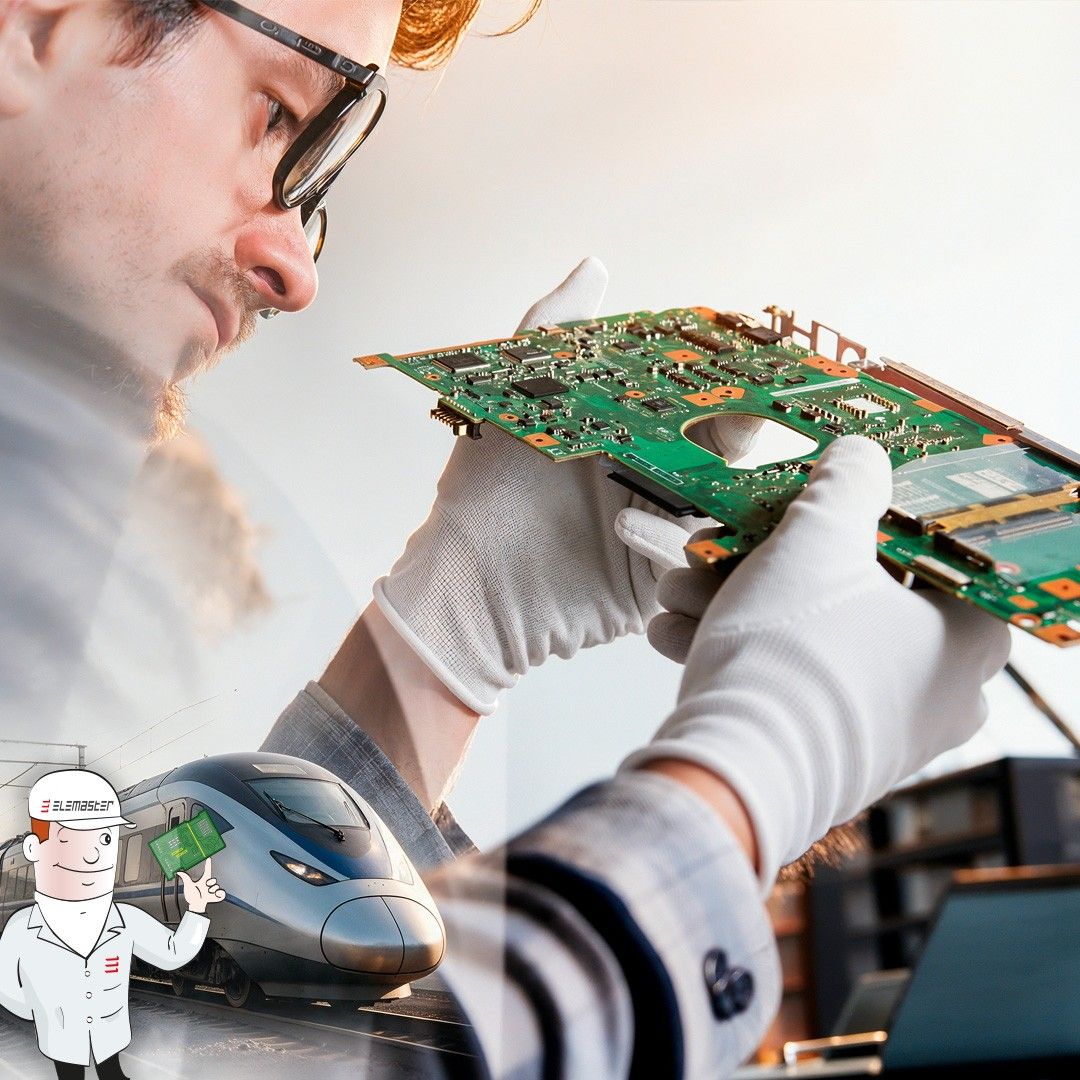
Before electronic equipment can be installed on a train or integrated into an electric vehicle charging station, it must demonstrate more than correct functionality. It needs to withstand demanding operating conditions and satisfy the requirements of its intended market.
This is where Eletech, the Head of the International Design Centres, R&D division of the Elemaster Group, has strengthened its testing capabilities. The company has extended the scope of its laboratory’s ISO/IEC 17025:2017 accreditation to include two standards: EN 50155:2026, covering electronic equipment used on railway vehicles, and EN IEC 61851-21-2:2021, addressing electromagnetic compatibility requirements for off-board electric vehicle charging systems. The extension brings additional validation capabilities for two sectors where electrical, environmental and electromagnetic reliability are essential.
EN 50155:2026 and the requirements of railway electronics
Electronic systems installed on railway vehicles operate in conditions that demand reliability over extended periods. EN 50155 is the reference standard for this equipment, covering devices used for control, regulation, protection, diagnostics and energy supply, together with electronics integrated into subsystems such as external doors and on-board ETCS signalling. The standard defines requirements relating to design, manufacturing, documentation and testing, as well as the electrical and environmental conditions that equipment must withstand throughout its operating life.
For railway electronics, these conditions include significant temperature variations, humidity, continuous vibration, mechanical shocks and fluctuations or interruptions in the vehicle’s power supply. These challenges must also be considered in relation to equipment designed to remain operational for decades.
The new EN 50155:2026 edition, available since May 2026, replaces the previous 2021 version. As manufacturers adapt to the updated requirements, access to testing partners capable of working according to the new edition becomes increasingly important.
Complete railway testing within a single laboratory
Eletech’s accreditation covers EN 50155:2026 in its entirety, allowing its laboratory to organise and perform the complete testing campaign required by the standard. The process combines electromagnetic compatibility, climatic, mechanical and electrical safety testing within one coordinated and qualified validation programme.
In particular, EMC, climatic, insulation, vibration and shock tests are accredited according to the internationally recognised ISO/IEC 17025:2017 standard. For railway equipment, the electrical safety requirements include two specific tests, insulation resistance and voltage withstand, both of which are included in the accredited scope.
The laboratory is equipped with climatic chambers and shakers capable of accommodating devices with different dimensions and configurations. This allows testing campaigns to be planned and completed within the same facility, without the need to transfer equipment between separate testing locations.
For manufacturers, keeping these activities together means reduced handling, shorter project lead times and lower overall testing costs, while avoiding the additional movements associated with using multiple facilities. All testing activities are carried out within a company certified according to ISO 9001 and ISO 22163, the quality management standard specifically developed for the railway sector.
Electromagnetic compatibility for EV charging infrastructure
The second extension addresses the requirements of electric vehicle charging systems, focusing specifically on the electromagnetic performance of off-board charging equipment. EN IEC 61851-21-2:2021 establishes the electromagnetic emission and immunity requirements for charging stations and power conversion units that supply electric vehicles through a conductive connection.
The standard applies to equipment operating at voltages of up to 1,000 V AC or 1,500 V DC, covering all four charging modes defined by IEC 61851-1. An EV charging station is essentially a high-power electronic system connected to both the electricity grid and a vehicle. Its operation must satisfy two complementary requirements: it must not generate electromagnetic disturbances that interfere with surrounding equipment, and it must continue operating reliably when exposed to disturbances originating from external sources.
As charging power increases, managing these conditions becomes more challenging. Manufacturers must control electromagnetic emissions while maintaining the level of immunity expected by operators and end users.
A growing charging network increases validation needs
The expansion of electric vehicle charging infrastructure is also increasing the demand for accredited testing. According to the International Energy Agency, almost 1.8 million public charging points were added worldwide in 2025, representing a 33% increase and bringing the global total to more than 7 million.
In Europe, approximately 260,000 new public charging points were installed during the same year, contributing to an expansion of the network of around 20%. Alongside market growth, regulatory requirements are also shaping the development of charging infrastructure.
The European Union’s Alternative Fuels Infrastructure Regulation (AFIR) requires fast charging stations with a minimum power of 150 kW every 60 km along the core trans-European road network from 2025. For charging equipment manufacturers, this expansion translates into a growing number of products requiring validation, alongside increasingly demanding technical and regulatory requirements.
Supporting validation from development to certification
Eletech’s approach extends beyond final certification testing. The laboratory supports manufacturers throughout the product validation process, beginning with development and pre-compliance activities and continuing through to the final certification stage.
Conducting pre-compliance testing during design allows potential problems to be identified and corrected before production. At this stage, modifying a circuit may require only a few hours of engineering work, rather than the additional costs associated with repeating a production run.
The inclusion of EN 50155:2026 and EN IEC 61851-21-2:2021 further expands an accreditation scope that already covers several application sectors. These include EMC testing for medical electrical equipment according to the EN IEC 60601 family, electromagnetic compatibility testing for industrial and energy products under the EN IEC 61000 family, and environmental testing according to the EN IEC 60068 family.
The laboratory therefore supports applications ranging from industrial automation to household appliances, alongside railway electronics and electric vehicle charging equipment.
For manufacturers operating across different industries and markets, this combination of capabilities provides access to a single qualified partner for product validation, bringing together development support, pre-compliance activities and accredited testing within one coordinated process. The updated accreditation certificate will be available on the Elemaster Group website.