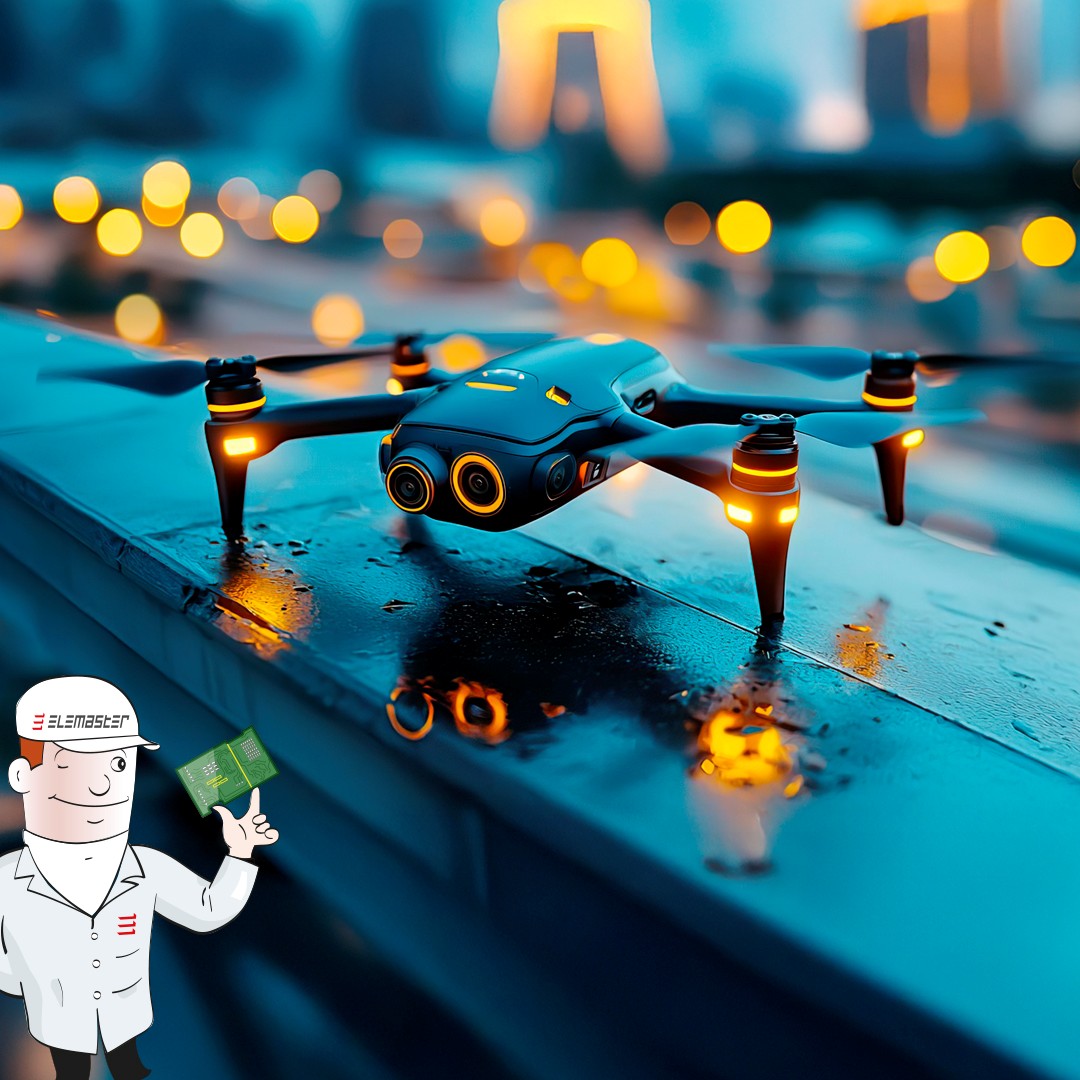
There comes a moment when innovation stops looking like science fiction and begins to take tangible shape. The drone sector crossed that threshold long ago. It is no longer a matter of “what might happen”, but of “how fast it is happening”. And behind this acceleration lies much more than mere technological evolution: there is a systemic shift in how we conceive airspace control, urban logistics, safety and data collection.
Autonomous drones and distributed intelligence: how AI is transforming UAVS
The most significant trend? Autonomy. Drones are no longer remote tools operated by humans, but intelligent platforms capable of navigating complex environments, collecting and interpreting data in real time, and making autonomous decisions.
A transformation driven by artificial intelligence, enabling drones to learn, optimise routes, forecast environmental conditions and adapt to changing operational contexts. This is the logic of predictive risk management applied to flight.
This new generation of UAS (Unmanned Aerial Systems) doesn’t simply “fly” better: it integrates with satellite data, 5G networks, and ground-based IoT systems. In practice, it becomes an active node in a widespread digital infrastructure.
This is the vision already outlined by several international agencies, such as the UK-based Sky-Futures, which forecast a structural growth of the drone ecosystem by 2026, featuring models with a very high degree of autonomy and interoperability.
Drone applications in logistics, industrial surveillance and emergency response
From warehouses to city rooftops, from borders to offshore platforms, the versatility of drones is redefining application boundaries in every sector. It is not just a matter of “delivery”: it is a paradigm shift in logistics.
As shown by case studies presented by Dronitaly, drones are becoming strategic tools for industrial surveillance, environmental monitoring, civil protection and predictive maintenance of large-scale plants.
This is not about replacing human intervention, but extending its capabilities, ensuring responsiveness and precision where time and safety are critical factors.
What it takes to fly: embedded electronics and aerospace supply chains
While the surface of the phenomenon is fascinating, the real challenge lies in its technological backbone. Because a drone is, first and foremost, a high-reliability electronic system: sensors, control units, communication systems, GPS, radar, stabilisers and power supplies.
And behind each system lies a technological supply chain that must guarantee increasingly stringent standards of quality, safety and traceability.
This is where expertise in electronic design and integration makes the difference.
With decades of experience in the design and industrialisation of complex embedded systems, the Elemaster Group has developed a deep understanding of how crucial early-stage intervention is to optimise product lifecycles, anticipate obsolescence, ensure remote maintainability and deliver solutions that are truly scalable and customisable.
From embedded design to certified integration: a full industrial backbone
In the race to develop scalable and certifiable drone systems, one of the key challenges remains the transition from concept to industrial-grade product. This is where the strength of an integrated partner ecosystem becomes essential.
Elemaster’s vertically structured offering, spanning electronic design, PCB manufacturing through Eleprint, and full mechatronic integration, demonstrates how a tightly connected industrial supply chain can make a tangible difference in the development of advanced drone systems.
Elemaster’s recent presence at key industry events such as ADM Aerospace Torino 2025 and the Dubai Airshow 2025 reflects a strategic positioning choice: to actively support the development of next-generation airborne platforms through its role as a reliable industrial partner in high-mix, high-reliability electronics. This commitment is underpinned by the Group’s capabilities in full traceability, regulatory compliance and advanced performance testing.
Sustainability and regulation in drone technology: the interoperability challenge
That’s not all. Drones also pose new challenges in terms of regulation and environmental impact. How do we manage energy sustainability? How do we ensure safe coexistence with other aerial and terrestrial vehicles? How can we avoid fragmentation between proprietary protocols and systems?
The answer increasingly lies in integrated ecosystems, where regulators, industries and developers share open standards, interoperable data and common frameworks.
This vision of collaborative infrastructure is now guiding many European and international policy directions. A vision where technology is only one element, alongside governance, ethics and social impact.
Turning deep-tech into reality: the role of industrial elevation
While drone innovation is increasingly software-driven, the hardware behind it must meet the highest standards of robustness and certification.
Through ELEVO, its structured innovation path, Elemaster supports deep-tech startups in transforming R&D efforts into certified and manufacturable solutions. This includes engineering co-design, prototyping, DfT/DfM optimisation, regulatory alignment and test execution, all crucial steps for making drone platforms not only functional, but deployable at scale.
This model has already empowered several early-stage companies to elevate their development path, enabling a structured and reliable transition from early R&D to market-ready solutions, especially in verticals such as advanced sensing and IoT, medtech and autonomous robotics.
The future of drone systems: cyber-physical design and integration challenges
In conclusion, talking about drones today means talking about distributed cyber-physical systems, multidisciplinary design, and interaction between electronics, AI and intelligent networks.
It means imagining a future where lightweight aerial mobility becomes an integral part of urban, industrial and environmental ecosystems.
ESG-driven drone engineering: compliance, product lifecycle and sustainability
Beyond performance, the next generation of drone systems must deliver on sustainability, durability and long-term supportability.
Elemaster’s engineering culture, rooted in obsolescence management, predictive maintenance strategies and products lifecycle optimisation, reflects a systemic approach where ESG principles are embedded from day one.
This mindset is increasingly sought after in aerospace and aerospace procurement processes, where supply chain transparency and responsible innovation are essential.
It is precisely in this future that Elemaster positions itself: translating innovation into reliable, certified solutions and acting not merely as a technology provider, but as an enabler of a new way of thinking about flight.