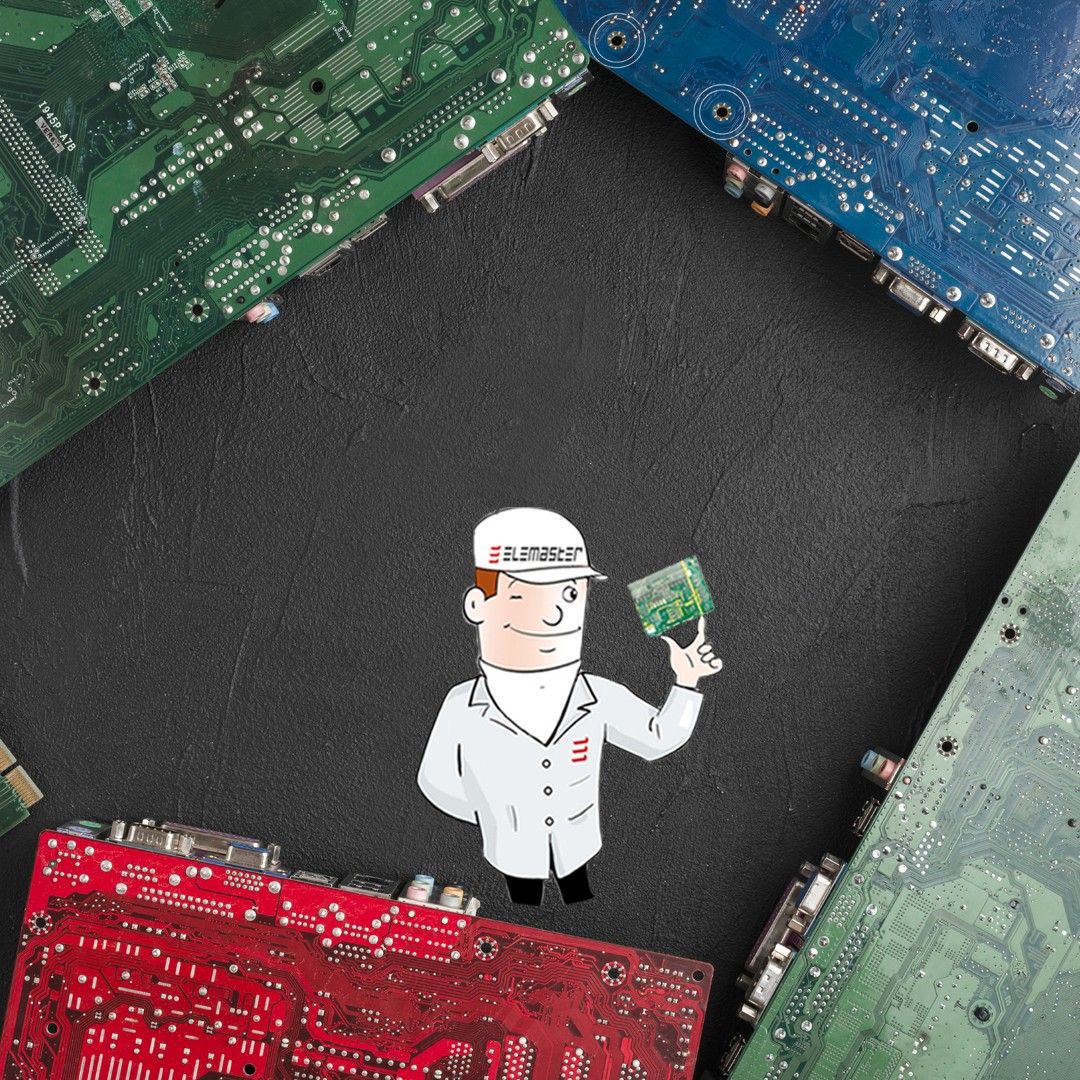
In the world of electronics, few innovations have had as significant an impact as the Printed Circuit Board (PCB). Today, PCBs form the backbone of almost every electronic device, from consumer products to aerospace, medical equipment, and industrial automation. Their evolution has been shaped by technological progress, industrial demands, and continuous innovation. Understanding this history provides not only a glimpse into the past but also a foundation to appreciate the strategic role of Eleprint and the Elemaster Group in shaping the future of PCB production.
The origins of PCBs
The origins of PCBs can be traced back to the early 20th century. Before the advent of printed boards, electronic circuits were assembled using point-to-point wiring. Components were connected manually with wires, a process that was time-consuming, error-prone, and unsuitable for mass production.
In 1936, the Austrian engineer Paul Eisler developed the first prototype of a PCB, while working on a radio set. Eisler’s approach was revolutionary: instead of relying on physical wires, he used a printed pattern of conductive material on an insulating substrate. This marked a decisive step towards miniaturisation and industrialisation of electronic circuits.
Initially, PCBs were adopted mainly for military applications during the Second World War. Their reliability and ability to withstand harsh conditions made them invaluable in communication and defence systems, paving the way for civilian technologies in the post-war years.
The rise of PCBs in consumer electronics
From the 1950s onwards, PCBs became increasingly common in consumer electronics. Radios, televisions, and household appliances began to incorporate printed boards, significantly reducing size and cost while improving performance.
The demand for miniaturisation, driven by the semiconductor revolution and the emergence of computers, accelerated the development of double-sided and multilayer PCBs. These allowed higher circuit density and enabled more powerful devices.
At this stage, PCB technology had firmly established itself as the foundation of the electronics industry, though further progress in materials, processes, and reliability standards was required.
The age of multilayer and high-density interconnects
The 1970s and 1980s marked a decisive shift with the widespread adoption of multilayer PCBs, which allowed the stacking of conductive layers separated by insulating materials. This innovation made it possible to integrate complex circuits in a smaller footprint, accelerating the growth of computing, telecommunications, and industrial automation.
Later developments introduced High-Density Interconnect (HDI) PCBs, enabling finer lines, smaller vias, and higher component density. These were essential for mobile phones, laptops, and medical devices, where space optimisation and performance are crucial.
Materials also evolved: while FR4 substrates remained widely used, specialised materials such as Rogers laminates and aluminium-based PCBs emerged to meet the needs of high-frequency, high-thermal, and high-power applications.
This era demonstrated that PCB innovation was no longer only about electrical connectivity but also about thermal management, signal integrity, and mechanical resilience.
PCBs in highly regulated industries
The progressive sophistication of PCB technology opened the door to applications in highly regulated sectors. Medical devices, railway signalling systems, aerospace equipment, and defence electronics increasingly relied on rigid, rigid-flex, and heavy copper PCBs designed for maximum reliability.
In these contexts, PCBs are not just components but mission-critical elements that must meet strict safety and quality standards. This is precisely the type of challenge that the Elemaster Group addresses through its global industrial platform, where compliance, certification, and innovation are integrated across the production chain.
Within the Group, Eleprint plays a key role in the PCB production process, combining technological expertise with manufacturing excellence. Its capabilities extend across rigid, flexible, and multilayer boards, ensuring that each product meets both customer-specific requirements and international standards.
The modern era: PCBs as enablers of innovation
Today, PCBs are ubiquitous. They are present in smartphones, electric vehicles, renewable energy systems, medical imaging equipment, and industrial automation platforms. Though often invisible to end-users, they are the silent enablers of modern innovation.
Current trends point towards even greater miniaturisation, higher density, and sustainability. Eco-friendly materials, recyclable substrates, and green manufacturing processes are shaping the future of PCB production. Meanwhile, integration into artificial intelligence (AI), the Internet of Things (IoT), and aerospace exploration highlights their enduring relevance.
The ongoing journey of PCB development reflects the dynamic interplay between technology, industry, and society. In this context, companies like Eleprint continue to drive progress by aligning innovation with industrial robustness.
PCBs: a legacy of innovation, a future of reliability
From the early days of point-to-point wiring to today’s engineered multilayer and HDI boards, the history of PCBs is a testament to the power of continuous innovation. What began as a simple idea by Paul Eisler has evolved into a technology at the heart of global digital transformation.
The story of PCBs also reflects the values of industrial players that have embraced this journey. Through its dedicated PCB production facility, Eleprint, and the integrated capabilities of the Elemaster Group, the company stands as a strategic partner in enabling next-generation electronics.
By combining tradition with innovation, the Group confirms its role in ensuring that PCBs remain the backbone of technological progress for decades to come.