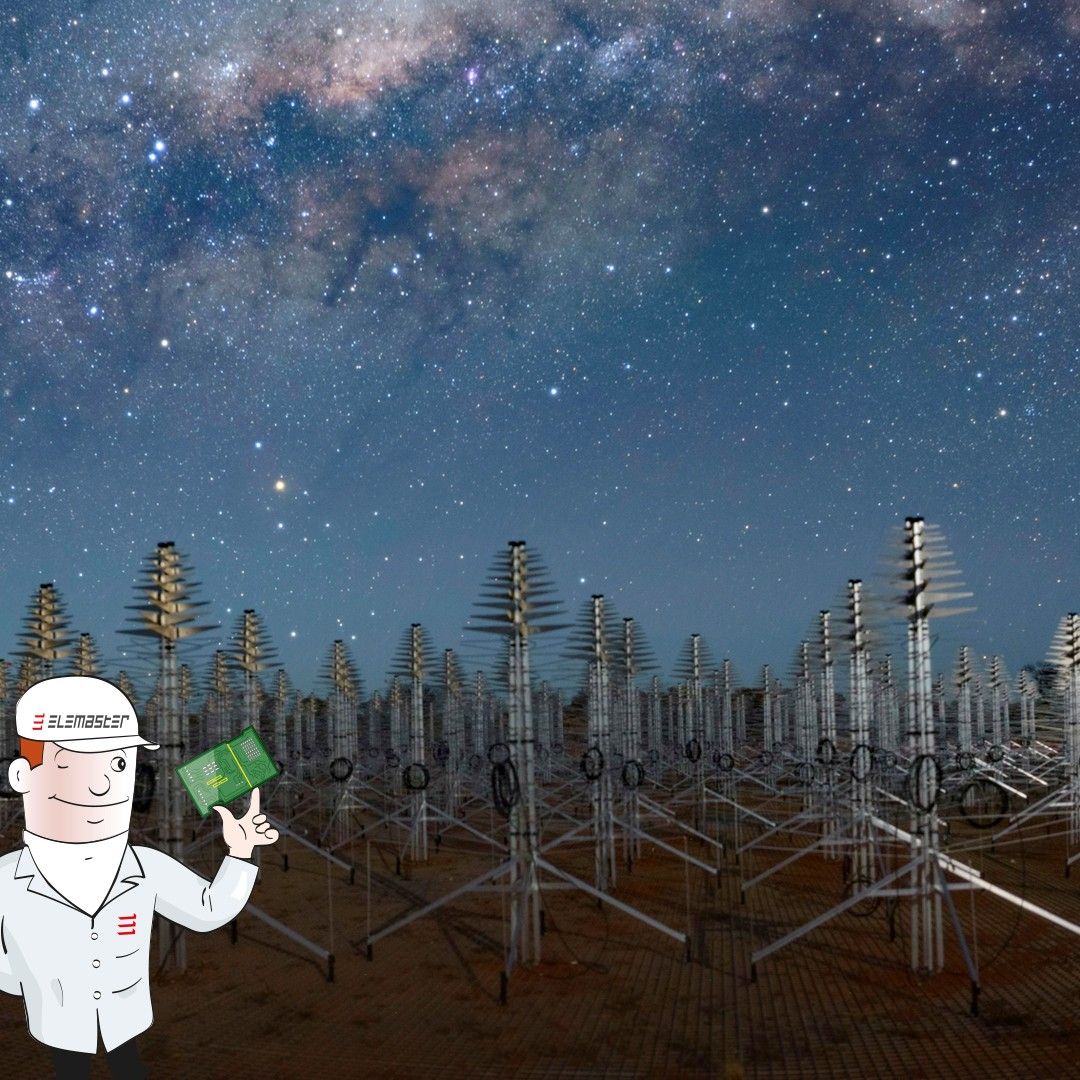
In the heart of one of the most ambitious scientific projects of the 21st century, a new model of engineering is taking shape: one where technological excellence and environmental responsibility are developed in parallel, from day one.
The Square Kilometre Array Observatory (SKAO), with its dual site in South Africa and Australia, will soon become the largest radio telescope ever built. Behind the scenes, however, is a sophisticated system of technical, ethical and environmental design choices, and in this landscape, Elemaster plays a central role.
Engineering hierarchy: precision at level 4
The SKAO project is structured across multiple hierarchical layers. At the top, scientific requirements dictate everything that follows. To satisfy the need for bandwidth, two separate arrays were required: one (LOW) in Australia and another (MID) in South Africa, covering ranges from 50 MHz up to 15 GHz. These needs cascade down to technical specifications for individual subsystems.
Elemaster has been entrusted with the Signal Processing Subsystem (SPS), at level 4. It’s a critical tier, one that must interface smoothly with other technologies both upstream and downstream. The systems engineered by Elemaster are built for this precise interoperability in a highly regulated scientific environment.
Human dignity above all: respecting people and land
SKA-Low is under construction at Inyarrimanha Ilgari Bundara, the CSIRO Murchison Radio-astronomy Observatory, on Wajarri Yamaji Country in Western Australia.
Every key project meeting begins with a slide like the one below:
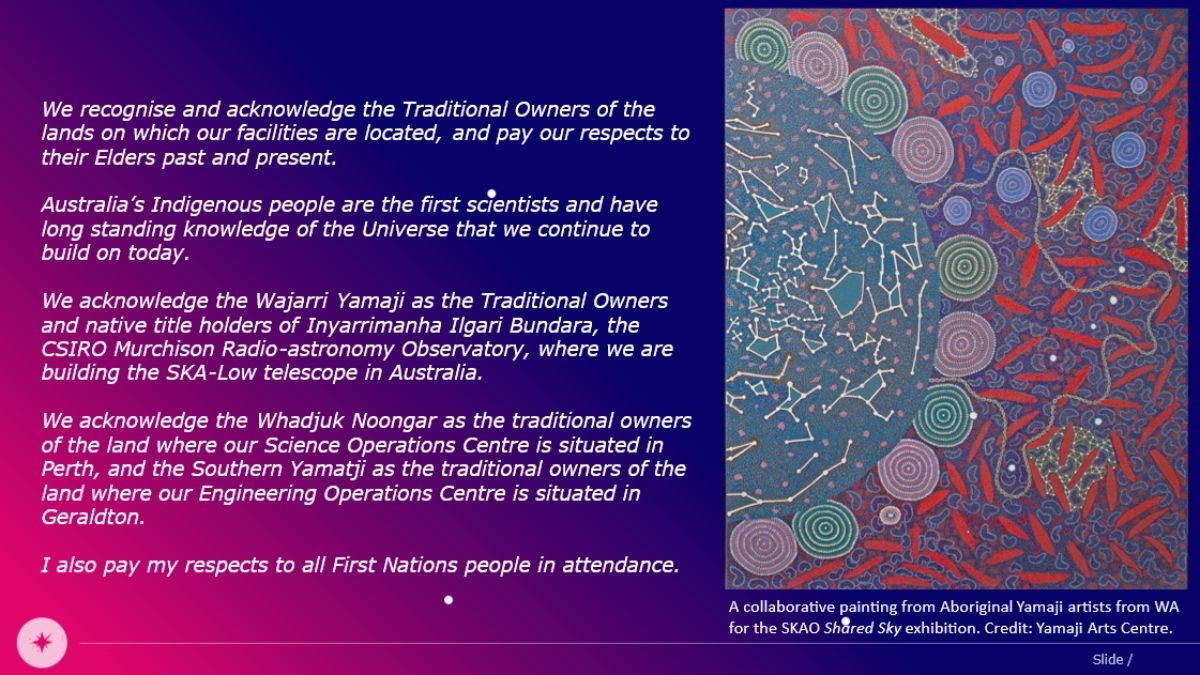
This acts as a reminder to all attendees, whether live or watching the recording, that partnering with Indigenous communities is at the heart of the SKA project.
Mandatory cultural and safety training
As such, anyone accessing the telescope site, even for a few hours, must complete a cultural awareness course. The course length depends on the time to be spent on-site. For stays longer than 5 days per calendar year, the training must be in person and lasts a full day.
In addition, a pre-induction safety course is mandatory to ensure the health and safety of everyone visiting the site. The course includes information on how to identify the presence of protected animal species and notify the site manager so the animal’s nesting area can be preserved. This safety protocol reflects a broader, integrated ESG approach.
Biodiversity as part of safety design
The protection of threatened species is not only an ethical choice but also an embedded component of the site’s safety standards, reaffirming how sustainability and engineering procedures can coexist.
Energy consumption and cooling challenges in the SPS cabinets
A project of this scale naturally has environmental impact: road preparation, antenna installation, cable laying, and building construction. The SPS system alone, designed and manufactured by Elemaster, when fully realised will consume 1.4 MW, distributed across 256 cabinets. The heat generated must be dissipated efficiently, and the system uses an air–water heat exchanger to stay within operating temperatures.
It’s worth noting that, as in many semiconductor systems, power consumption increases exponentially with temperature. In this case, the model is approximated as quadratic, since the operational temperature range varies only slightly. Even small reductions in consumption, just a few hundred watts per cabinet, can significantly reduce fuel usage and resulting emissions. Elemaster collaborated with the cooling subsystem supplier to identify the optimal operating point that balances scientific performance and environmental responsibility.
Moreover, the equation must also consider the resources required to ensure the cooling of the water and the operational environments. Reducing the resources spent on generating the energy needed to operate brings environmental benefits at the installation site (fewer fuel deliveries, less traffic, less pollution) and indirectly helps to lessen the impact on the land.
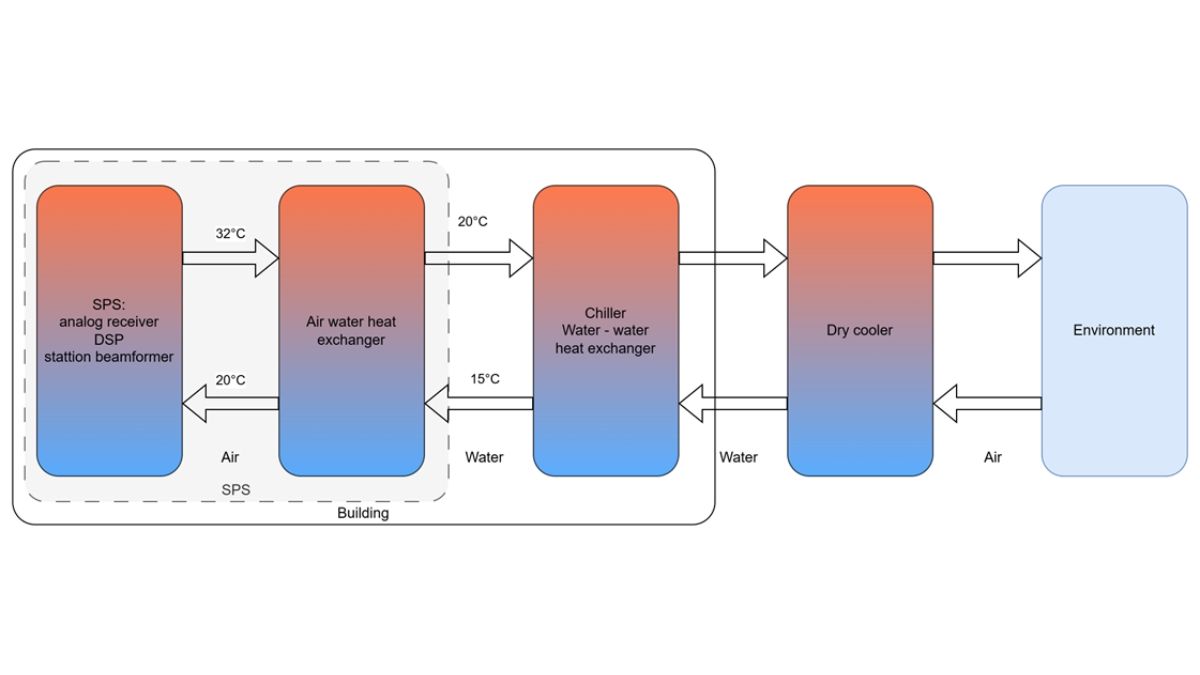
Thermal management is not a peripheral challenge. It shapes the design constraints of the entire Signal Processing Subsystem and affects long-term sustainability metrics.
Sustainable engineering through reduced logistics impact
An additional aspect of environmental responsibility concerns logistics. In this context, Elemaster redesigned the packaging for cabinet shipments, reducing plastic use by around 90%, and is also redesigning the internal packaging to shrink transport volume by 45% and support materials by over 50%.
These are not only packaging innovations. They are manifestations of an integrated ESG mindset embedded in the company’s design logic, which also extends to supply chain optimisation and sustainable shipping practices.
Packaging for remote deployment
Shipping systems to remote locations with minimal impact require advanced packaging logic: volume, weight, environmental exposure, and recyclability must all be considered.
Embedding ESG into system engineering processes
Clearly, alongside traditional corporate processes (such as the simplified version of IEC15288 described in INCOSE’s System Engineering manual), ESG activities now operate as cross-functional elements. In the following diagram, these appear in red and span across technical, organisational, and economic project management processes.
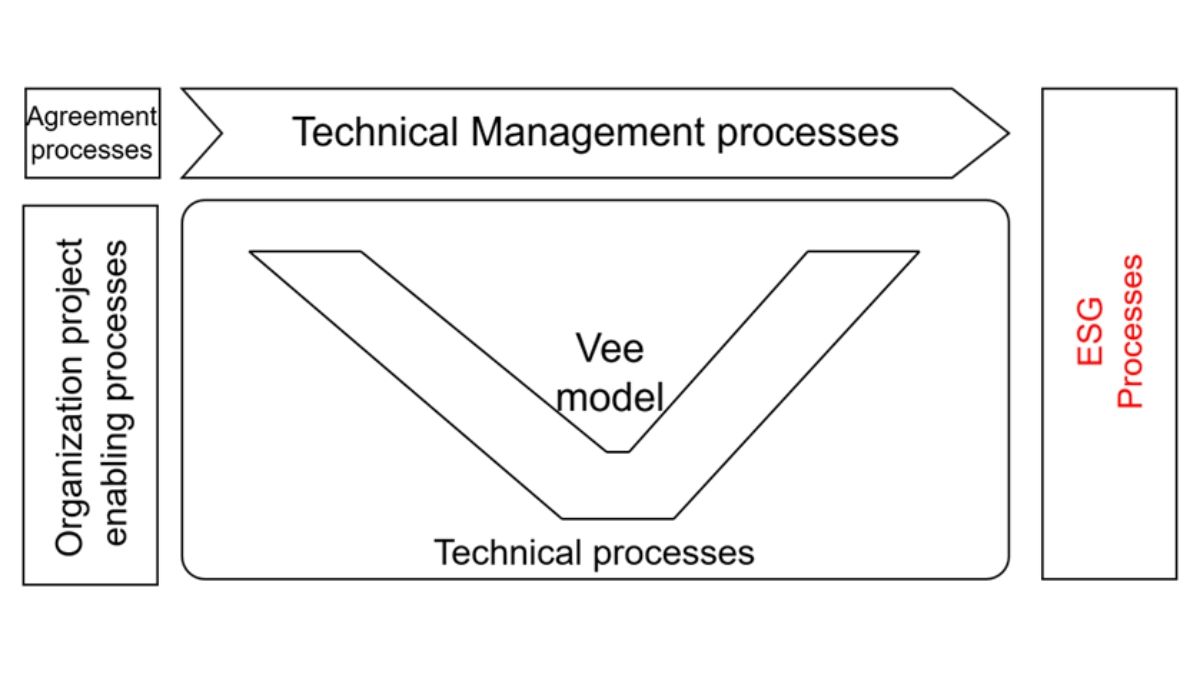 Such integration allows engineering decisions to reflect long-term ESG impacts, with direct relevance for the electronics industry.
By integrating ESG not as a post-design compliance task but as a parallel track in system development, Elemaster ensures sustainability is designed-in from day zero.
Capabilities that enable responsible design from day one
Elemaster’s extensive expertise in obsolescence management, life cycle engineering and maintenance planning enables the company to design systems that are not only functional, but sustainable from the outset. In SKAO, this translates into design choices that extend the product’s life, reduce the need for onsite intervention and enable predictive maintenance strategies, ultimately lowering the environmental and logistical footprint.
Even in projects where Elemaster acts only as a design and manufacturing partner, without directly handling installation, the SKAO experience provides valuable insight into how early-stage design decisions can create measurable ESG benefits.
Lifecycle thinking in large-scale infrastructure
Lifecycle engineering is not just about reliability. It’s about environmental longevity, supportability, and lowering the cost of future upgrades in global-scale infrastructure.
Article cover image:
Moonrise over SKA-Low. Image taken June, 2025 at S10.
Credit: CSIRO/DISR/Alex Cherney and Tom Fowler