In highly regulated sectors, the value of a laboratory is not measured solely by the equipment it owns, but by the reliability of the results it produces. Precision, repeatability and impartiality are not optional attributes: they are industrial requirements.
This is the framework in which ISO/IEC 17025 accreditation must be understood. Not as a formal label, but as a structured system that certifies technical competence, measurement reliability and organisational robustness.
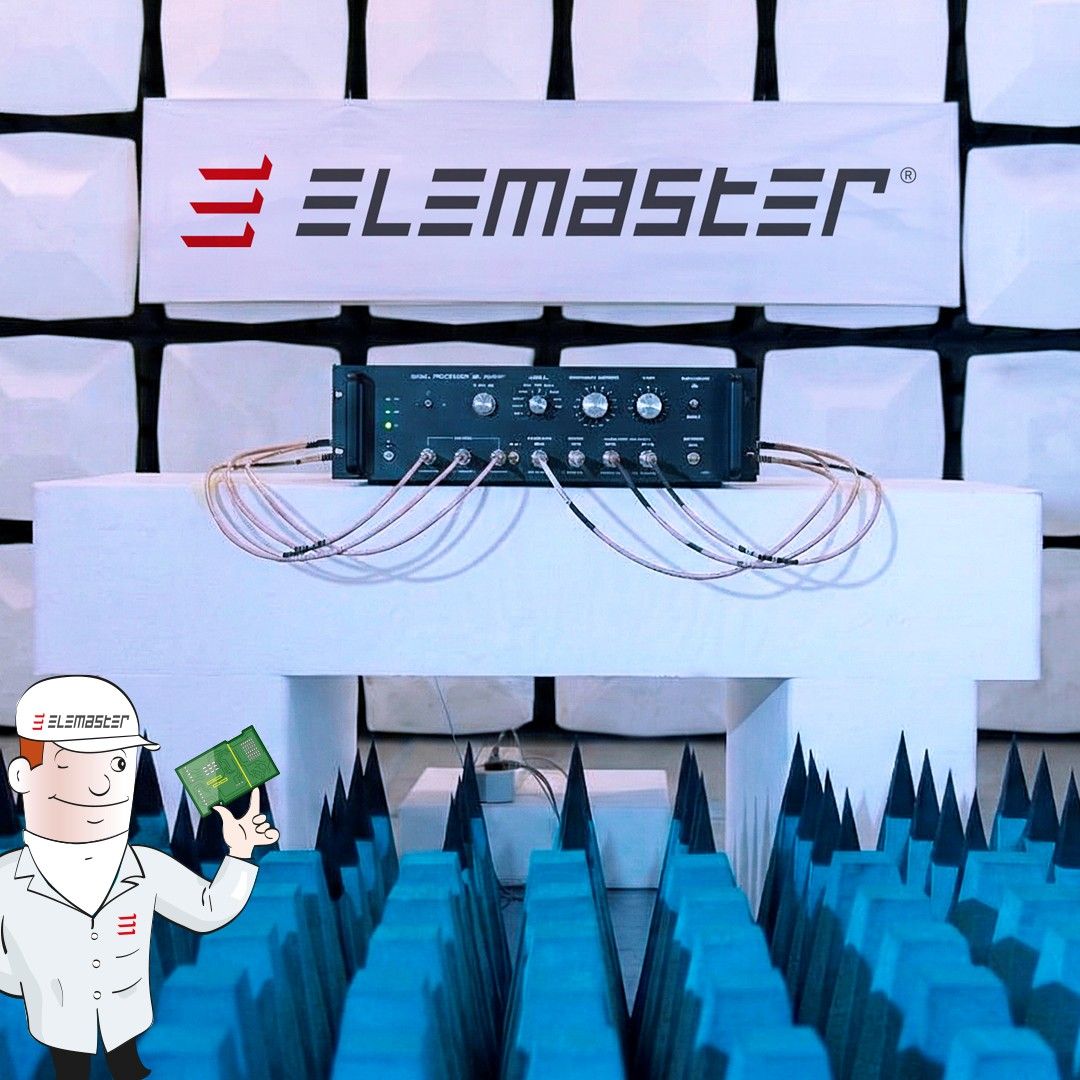
In the context of EMC testing and product validation, ISO/IEC 17025 becomes a central pillar that connects laboratory operations, engineering decisions and market access. Within this framework, the Eletech Laboratory operates as an ISO/IEC 17025-accredited facility, integrating EMC validation activities into the broader engineering ecosystem of Elemaster.
Beyond a formal requirement: what ISO/IEC 17025 actually certifies
ISO/IEC 17025 accreditation attests that a laboratory operates according to internationally recognised criteria of technical competence, impartiality and the ability to generate precise and repeatable results.
Laboratory accreditation within the ILAC circuit, ensures that test reports are recognised internationally under mutual recognition agreements. This recognition has a direct operational consequence: results are comparable over time and across laboratories, reducing the need to repeat tests in different countries.
The standard does not focus only on procedures. It encompasses qualification of personnel, structured skill matrices, calibration management, control and evaluation of measurement uncertainty, and participation in interlaboratory comparisons. These elements ensure that data is not only generated, but statistically reliable and technically defensible.
At Eletech, the lead company of the International Design Centres (IDCs), R&D division of Elemaster Group, these requirements translate into defined qualification paths for laboratory personnel, formalised competence matrices and controlled measurement processes aligned with ISO/IEC 17025 prescriptions.
Competence as a measurable requirement
Within an ISO/IEC 17025-accredited laboratory, personnel qualification is not optional. Technicians must be authorised to perform all tests required by the relevant product standards.
This requirement reinforces operational integrity. Every measurement follows standard-defined procedures, and each test plan is developed through:
- theoretical analysis of documentation
- confirmation on the physical prototype
Preliminary evaluation of interfaces, ports, cable lengths and operating conditions determines which tests must be executed or can be excluded. The laboratory and the manufacturer jointly define the test plan, ensuring alignment between normative theory and real product architecture.
Competence is therefore embedded not only in execution, but in interpretation. In the case of the Eletech Laboratory, this structured approach ensures consistency between engineering analysis and accredited testing activities.
Repeatability, uncertainty and decision reliability
Measurement uncertainty and calibration management are sometimes perceived as administrative burdens. In reality, they represent protection against incorrect decisions.
Poorly controlled uncertainty can generate false positives, where compliant products are unnecessarily modified, or false negatives, where non-compliant products reach certification stages.
ISO/IEC 17025 introduces rigorous management of these parameters. Interlaboratory tests verify statistical coherence of results, strengthening confidence in data and reducing the risk of strategic misjudgements.
In sectors such as medical devices, accredited reports are increasingly becoming de facto mandatory. The market expects documentation that demonstrates traceability, repeatability and recognised competence. For the Eletech Laboratory, operating under ISO/IEC 17025 accreditation ensures that EMC results are reproducible, technically defensible and internationally recognised.
International recognition and time-to-market
The MRA (Mutual Recognition Agreements) framework ensures that accredited test results are accepted across borders. This has a direct impact on time-to-market.
When reports are internationally recognised:
- duplication of tests abroad is reduced
- additional audits can be avoided
- certification processes become smoother
Accreditation therefore functions not only as a quality guarantee, but as a business accelerator. It reduces friction in global supply chains and simplifies access to regulated markets.
For projects developed within the Elemaster and Eletech ecosystem, the presence of an internally accredited laboratory further reduces coordination complexity between design and validation phases. Within the broader ELEVO, the Group’s Innovation Path, which promotes integration between R&D, validation and industrialisation, ISO/IEC 17025 accreditation reinforces a development model where testing competence is structurally embedded into the product lifecycle.
ISO/IEC 17025 within the EMC development ecosystem
In the specific context of EMC validation, ISO/IEC 17025 interacts directly with:
- emission and immunity testing
- pre-compliance activities
- iterative troubleshooting processes
- software and hardware validation
When the laboratory is integrated within the broader engineering ecosystem, as in the case of Elemaster and Eletech, accreditation reinforces the entire development chain.
Access to an accredited anechoic chamber during the design phase enables:
- repeatable pre-compliance measurements
- immediate validation of design modifications
- reduction of rework before final certification
The Eletech Laboratory, operating under ISO/IEC 17025 accreditation, allows EMC validation to be positioned not as a downstream verification step, but as a structured component of product development.
For customers whose products are developed internally within the Elemaster/Eletech ecosystem, this integration represents a concrete competitive advantage in terms of reduced delays and faster time-to-market. For external customers not involved in the design process, the service aligns with the standards of traditional accredited laboratories.
Immunity testing and robustness beyond minimum requirements
Within an ISO/IEC 17025-accredited environment, immunity tests such as:
- EFT/Burst
- Surge
- ESD
are executed according to standardised procedures and defined performance criteria.
Increasingly, manufacturers choose to extend test levels beyond normative minima to assess real robustness under operational transients’ phenomena, power fluctuations or unbalanced loads.
The credibility of these extended evaluations depends on measurement traceability and procedural rigour. Accreditation ensures that even robustness-driven tests maintain statistical reliability and comparability, as applied within the Eletech Laboratory framework.
A strategic asset, not a symbolic certificate
ISO/IEC 17025 accreditation should not be interpreted as a symbolic badge. It represents:
- a guarantee of competence
- a safeguard against measurement error
- a tool for reducing regulatory risk
- a facilitator of international market access
- a structural contributor to time-to-market
In complex electronic systems, where EMC behaviour depends on hardware architecture, cabling, shielding and software robustness, reliable data becomes the foundation for every design decision.
Without a structured and accredited laboratory framework, testing risks becoming a fragmented activity. With ISO/IEC 17025, and through its application within the Eletech Laboratory, it becomes an industrial process aligned with engineering, certification and business strategy.
In this sense, accreditation is not an administrative endpoint. It is a technical infrastructure that supports innovation, protects decision-making and strengthens the credibility of the entire product development cycle.