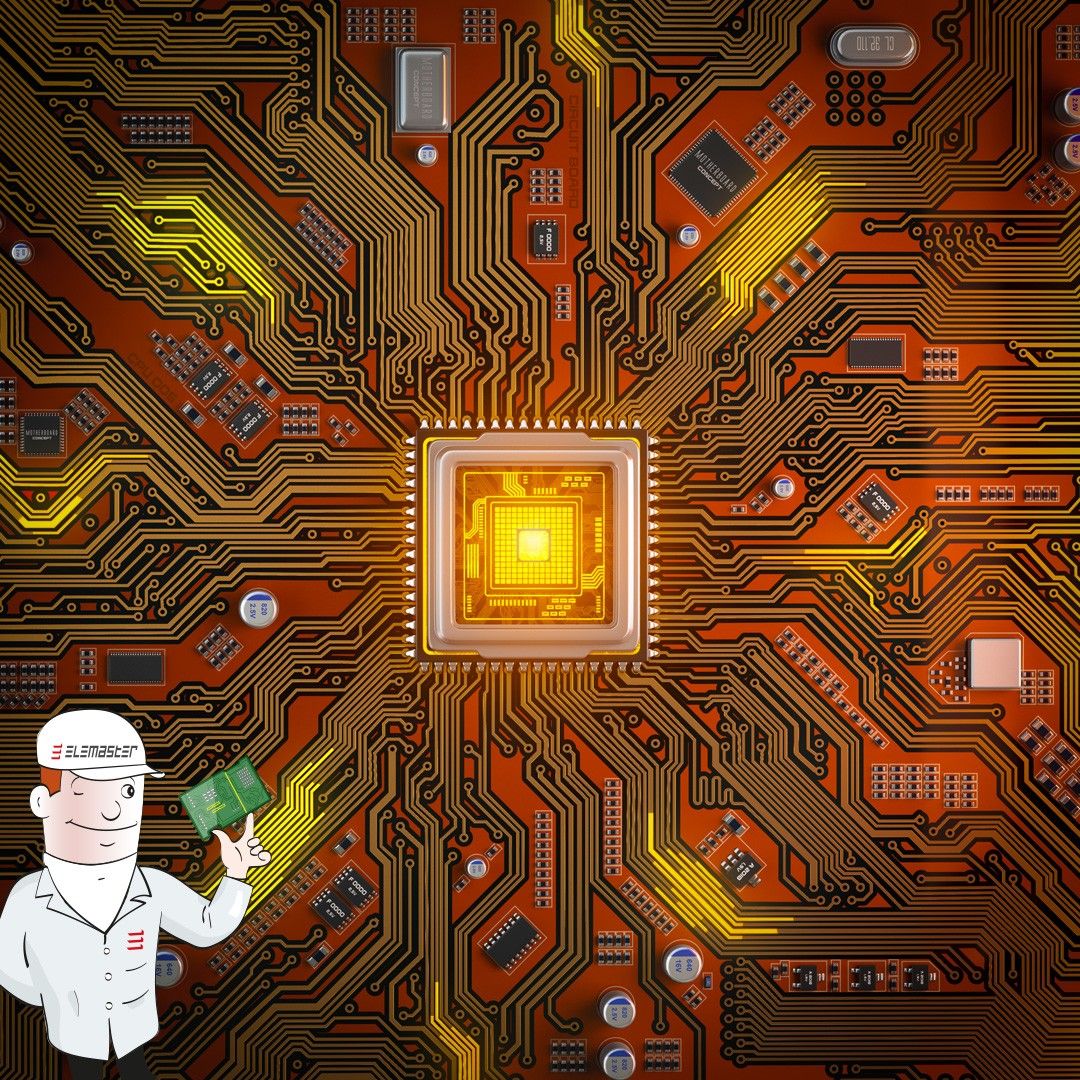
The next major step in medical electronics will not depend on a single revolutionary sensor or algorithm. It will be built into the board that supports them. As diagnostic imaging systems, implants and wearables move towards higher density, greater flexibility and stricter reliability requirements, the printed circuit board has become one of the technologies that defines what can actually be achieved.
Medi’Nov Connection and the medical device lifecycle
In early July, the Lyon Convention Center hosted Medi’Nov Connection, the annual gathering of the French medtech industry, bringing together manufacturers, startups, clinicians and investors. Elemaster Group was among the exhibitors, taking part in a 2026 edition focused on a central question: how far artificial intelligence and advanced electronics can push the lifecycle of a medical device, from concept to end of life.
This context offers a useful opportunity to look at a component that often remains outside the spotlight, but plays a decisive role in whether that lifecycle can function effectively: the printed circuit board.
Medical electronics: more performance with less margin for error
Medical electronics has evolved at a speed that few other industries can match. The scientific advances of the 1970s and 1980s in diagnostics and imaging were not driven by electronics alone, but electronics provided the platform that allowed those technologies to scale. Today, as the sector moves towards smaller devices and continuous wearable monitoring, that same platform is being asked to deliver more with less: less space, less power and less tolerance for error.
Behind these devices is a complex world of high-tech electronics, ranging from printed circuit boards, PCBs, to assembled printed circuit boards, PCBAs. The requirements they must satisfy vary widely depending on the area of medical electronics in which they are used.
Five segments, different PCB requirements
The market can be divided into five broad segments. The first is diagnostic and medical imaging, including ultrasound, X-ray, CT, endoscopy and MRI. The second is therapy devices, such as ventricular assist systems, drug pumps and dialysis equipment. The third is wearables, including glucose sensors, heart-rate monitors and hearing devices. The fourth is medical implants, such as pacemakers, defibrillators and neurostimulators. The fifth is external medical equipment, from ECG and EEG sensors to digital thermometers.
Each of these segments places different demands on circuit design. Wearables tend to require flexible and rigid-flex circuits, because weight and volume constraints cannot be addressed effectively with a rigid board. Medical imaging equipment, by contrast, moves towards rigid, high-density interconnect boards, HDI, produced with specialty materials such as polyimide and ceramic, and designed to withstand X-rays, ultrasound exposure and other demanding operating conditions.
Implants and the limits of miniaturisation
Implants represent a separate category. In this field, reliability is essential, because these boards undergo the strictest testing before entering the human body, while miniaturisation is pushed to its extreme. One process that is gaining relevance in this area is Semi Additive Process manufacturing, SAP, which can produce traces and isolation gaps of 10 to 15 microns. This allows a level of density that subtractive, chemical-based processes cannot achieve.
Eleprint’s role in advanced medical electronics
No single manufacturer can credibly claim to cover every medical electronics end-market with the same level of expertise. Eleprint, within the Elemaster Group, has developed a position across several of these areas, supported by continuous investment in production capability and research and development.
The company already works with major electromedical clients, covering rigid HDI boards and rigid-flex circuits for therapy devices, diagnostics and external medical equipment. This work is based on close co-design with customers, bringing manufacturability considerations into the earliest phases of a project instead of treating them as a later constraint. The objective is to maximise reliability once the device is deployed in the field.
Reliability as an operational requirement
In this sector, reliability is not a marketing statement. It is an operational requirement, and it influences how a PCB manufacturer organises itself internally. Eleprint’s R&D function is involved throughout the project, from circuit co-design to design-to-manufacturing handover, rather than being brought in only during prototyping.
For markets where a board failure can result in a failed implant or an inaccurate diagnostic image, this continuity between design and production is what determines whether a component can perform as required over years of use inside, or on, a patient’s body.
A growing electromedical market
The market background explains the importance of this approach. Over the past five years, the electromedical sector has grown at a compound annual rate of between 6.5% and 7.5%, and industry estimates place the total market close to 80 billion dollars by 2026.
Digitalisation and artificial intelligence, especially through connected and IoT-enabled devices, are opening monitoring and telemedicine applications that were barely imaginable only a few years ago. This direction is exactly what events such as Medi’Nov are now built around.
A roadmap shaped by technical demands
For a PCB manufacturer, this growth does not create one single technical demand, but a broadening set of requirements: flexibility for wearables, density for implants and robustness for imaging systems, all within a regulated environment that allows little room for shortcuts.
Eleprint’s ambition is to keep pace with this roadmap as a reliable and technically capable partner. The company approaches the requirements of the electromedical sector not simply as constraints to be managed, but as a continuous innovation challenge capable of shaping better electronics and, ultimately, better outcomes for patients.