Large scientific infrastructures are often described through their technologies: antennas, data rates, algorithms and performance metrics. Yet, behind every complex system lies another architecture, less visible but equally critical. It is the human architecture that connects people, cultures, disciplines and ways of working.
The SKA project is a technological challenge of unprecedented scale, but it is also a human experiment in global collaboration. Working on such a project means navigating technical complexity while continuously mediating between different professional languages, cultural backgrounds and operational priorities.
In this context, engineering becomes as much about people as it is about technology.
A multicultural laboratory beyond formal meetings
The SKA Observatory is responsible for building the SKA telescopes in collaboration with partner organisations, bringing together engineers, scientists and technicians from across the globe. Europe, Australia, Africa, the Americas and Asia converge daily on shared objectives, often separated by time zones but connected by a common scientific purpose.
This diversity is not confined to formal project meetings. It also emerges in informal moments that reveal how collaboration truly works. One recurring image from the project is a barbecue where more than ten nationalities gather around the same table, sharing food, habits and personal stories alongside technical discussions.
These moments are not peripheral. They play a fundamental role in building trust, reducing cultural friction and creating the conditions for effective collaboration. When people understand each other beyond job titles, technical alignment becomes easier.
Learning to work through different engineering cultures
Exposure to different ways of working is one of the most valuable professional experiences offered by collaborations like the SKA project. Engineering cultures vary widely, and working in a global context means learning to recognise and navigate these differences, which often include:
- approaches centred on rigorous formalisation and documentation
- iterative, experimentation-driven development models
- different attitudes toward risk, validation and decision-making
- diverse communication styles and organisational hierarchies
Working within the SKA project means learning to adapt to these differences rather than forcing convergence. Engineers are encouraged to step outside familiar frameworks and develop a broader professional perspective. Over time, this exposure strengthens problem-solving skills and fosters a more resilient engineering mindset.
Rather than imposing a single methodology, the project evolves through negotiation and mutual understanding, turning diversity into a functional asset.
Mediating between science, industry and the field
One of the most delicate aspects of working on the SKA project is mediating between three distinct worlds, each driven by its own priorities and constraints:
- scientific advisors, focused on theoretical models, observational accuracy and long-term research goals
- industrial teams, responsible for translating requirements into reliable, manufacturable systems
- site engineers, dealing with installation constraints, maintenance needs and operational continuity
Aligning these perspectives is a continuous effort. Decisions must balance scientific ambition, industrial feasibility and real-world operating conditions. This mediation is rarely linear and often requires revisiting assumptions as new constraints emerge.
In this sense, system engineering extends beyond technical integration. It becomes a process of translation, where different priorities are aligned into a coherent and workable solution.
When expertise meets curiosity
One episode captures the spirit of this collaborative environment. During a technical exchange an engineer with relevant experience from NASA asked Marco Arrigoni, Eletech System Engineer and technical leader for the SKA project in the Elemaster Group, to explain how remote control of the SPS systems was implemented.
The question did not stem from a lack of competence, but from genuine curiosity and respect for a different approach. The ensuing discussion became an opportunity to exchange perspectives, challenge assumptions and refine solutions.
Moments like this illustrate a key characteristic of working on the SKA Project: expertise does not eliminate questions. It amplifies them. Even among highly experienced professionals, learning remains central to progress.
Dialogue as a core engineering capability
In global scientific projects, technical excellence alone is not sufficient. The ability to communicate, listen and adapt becomes a core engineering capability, expressed through concrete practices such as:
- listening to scientific and operational constraints
- translating complex requirements across disciplines
- aligning expectations between international stakeholders
Elemaster, through its collaboration with the SKAO, demonstrates this capacity to engage with diverse scientific communities, industrial partners and site teams. Dialogue is not treated as a soft skill detached from engineering, but as an integral part of delivering complex systems.
This approach enables the company to operate effectively within international ecosystems, where success depends on trust, clarity and shared understanding as much as on technical performance.
People at the centre of complex systems
The SKAO reminds us that even the most advanced technological systems are ultimately built by people, for people. The success of the project depends not only on synchronised signals and robust hardware, but on synchronised intentions, expectations and collaborations.
Working on a global project like this means accepting complexity as a constant and embracing diversity as a source of strength. It challenges engineers to grow not only in technical competence, but also in cultural awareness and organisational maturity.
In the end, the technologies that enable humanity to explore the universe are inseparable from the people who design, build and operate them. And in the SKA project, it is this human dimension that makes truly global engineering possible.
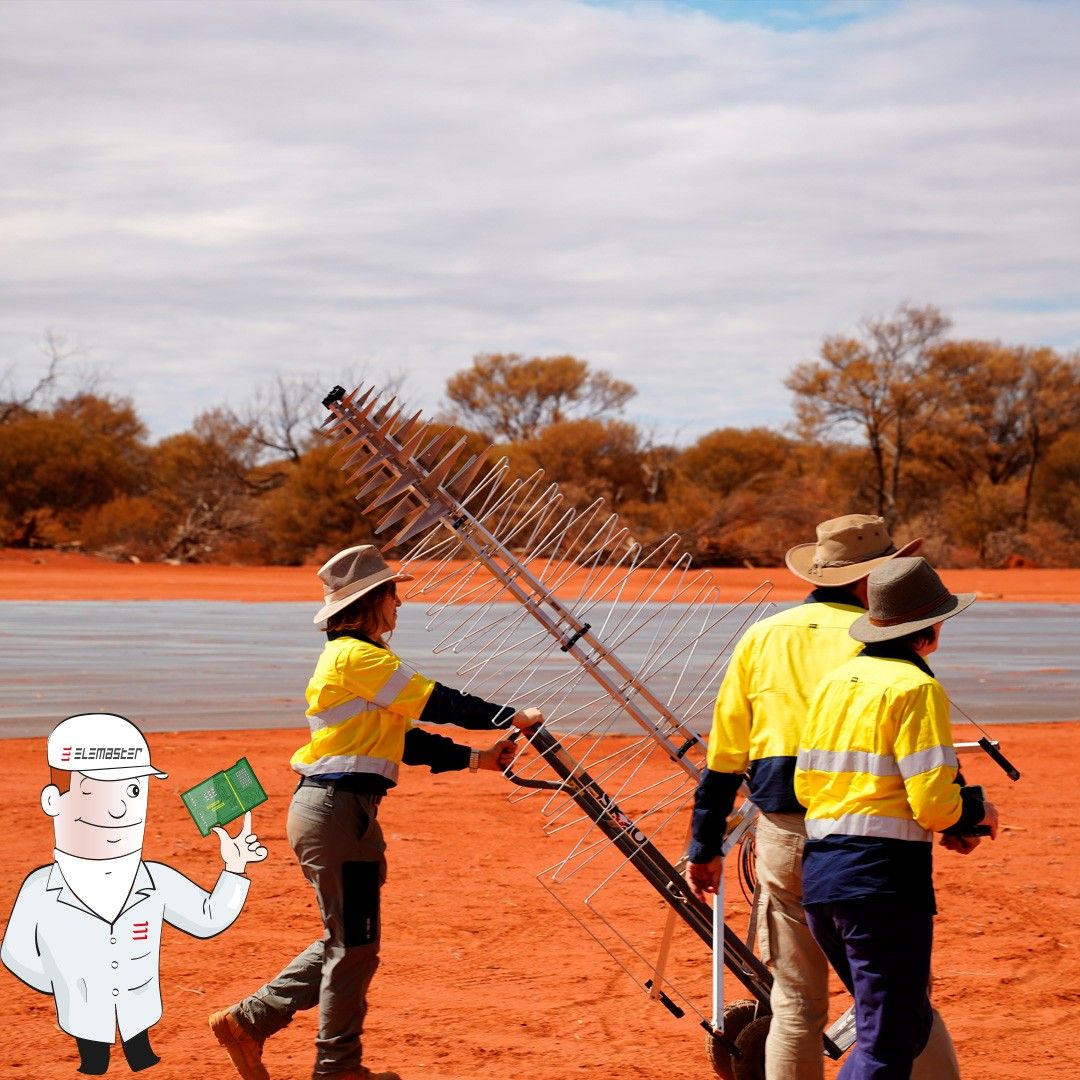
Article cover image:
Installation of the first SKA-Low antennas on site at Inyarrimanha Ilgari Bundara, the CSIRO Murchison Radio-astronomy Observatory,
on Wajarri Country in Western Australia on 7 March 2024.